




Over 14 Years Experience!
Concrete Stair Construction for Hillside Properties in Bay Area
Conquering San Francisco's Vertical Landscape
Elevation changes are inevitable in San Francisco—how you navigate them makes all the difference. We design and build concrete stairs that provide safe, code-compliant access while enhancing your property's architectural character. From subtle front entry steps to dramatic terraced staircases, every installation reflects our commitment to both function and form.
Testimonials
Our Work Speaks for Itself
Professional Staircase Solutions for Bay Area Properties
Concrete stairs represent critical infrastructure on properties with grade changes. They must meet strict building codes for safety, withstand constant use and weather exposure, and contribute positively to your home's appearance. O'Hanlon Construction brings 14+ years of stairway construction experience to every project, ensuring installations that deliver reliable performance and lasting beauty.
Our expertise encompasses everything from intimate garden steps to substantial outdoor staircases serving as primary access. We understand San Francisco's building requirements, work expertly with challenging slopes, and create stairs that integrate seamlessly with surrounding hardscape and architecture while providing comfortable, safe passage for decades.
What Distinguishes Exceptional Concrete Stairs?
Superior staircase construction demands meticulous attention to human factors and building science. Tread depth and riser height must fall within narrow ranges that ensure comfortable climbing—too steep exhausts users, too shallow causes stumbling. Adequate width accommodates passage, proper drainage prevents water accumulation, robust structure prevents bouncing or settling, and thoughtful finishing balances traction with aesthetics.
The O'Hanlon Stair System Includes:
Design & Code Compliance
We design every staircase with precise tread depths, consistent riser heights, appropriate widths, and handrail installations that meet or exceed San Francisco's strict building code standards, ensuring comfortable climbing while satisfying inspectors and providing long-term safety.
Foundation & Support
We engineer foundations that prevent settling and construct support structures capable of handling constant use without deflection, eliminating the bouncing and movement that signal inadequate support.
Precision Forming
We build exact forms that maintain consistent riser heights throughout the run—critical for preventing trips caused by unexpected dimension changes—ensuring comfortable, safe climbing that becomes intuitive rather than requiring conscious attention.
Quality Concrete Mix
We specify mixes with appropriate compressive strength ratings and consistency for proper consolidation around reinforcement, with enhanced durability packages that protect against weathering and surface wear.
Slip-Resistant Finishing
We apply finishes engineered for maximum traction in wet conditions—critical for San Francisco's fog and rain—whether broom texturing, exposed aggregate, or light stamping, with every finish prioritizing safety while achieving your desired appearance.
Why Choose Concrete Stairs for Your Bay Area Property
Code Compliance & Inspection Approval
San Francisco's building department strictly enforces stairway regulations. Professionally built concrete stairs designed to code specifications pass inspections reliably, avoiding costly reconstruction. This compliance protects you legally and ensures safe construction.
Rhythm & Muscle Memory
Consistent riser heights and tread depths allow safe navigation through muscle memory—your body learns the rhythm. Inconsistent stairs cause trips and falls. Precision-formed concrete stairs maintain exact dimensions throughout runs, creating predictable, safe climbing.
Load Distribution
Concrete stairs distribute weight across their entire structure rather than concentrating loads on individual treads like wood stairs. This structural advantage prevents bouncing, creaking, and premature wear even with heavy traffic or moving furniture up and down.
Fire Resistance
Non-combustible concrete stairs won't fuel fires or collapse from heat exposure like wood stairs. This fire resistance provides critical egress protection and may positively impact insurance rates, particularly important for exterior stairs serving as emergency exits.
Freeze-Thaw Resistance
While freezing is rare in San Francisco, occasional cold snaps do occur. Properly mixed concrete stairs resist the expansion forces from ice formation that crack masonry or damage wood. This durability ensures reliable function regardless of weather extremes.
Uniform Appearance Over Time
Concrete stairs age gracefully, developing slight patina without the dramatic changes wood exhibits through weathering, rot, or insect damage. This consistency maintains your home's appearance and value without requiring periodic refinishing or replacement.
Concrete Stair Design Options for San Francisco
Your stairs should provide safe vertical circulation while addressing your property's specific grade challenges. We offer specialized options designed for elevation changes and access needs.
Integrated Landing & Seating Platforms
Landings expanded beyond code minimums to create rest areas, viewing platforms, or social spaces. Transforms purely functional stairs into destination features.
Best For:
- Long stair runs requiring rest breaks
- Properties with view opportunities mid-elevation
- Creating outdoor seating in vertical spaces
- Elderly residents needing frequent rest points
Platform Features:
- Oversized landings (6x8 feet or larger)
- Built-in concrete benches at landing edges
- Planter walls defining landing spaces
- Level spaces for container gardens or art
- Multiple direction changes creating interest
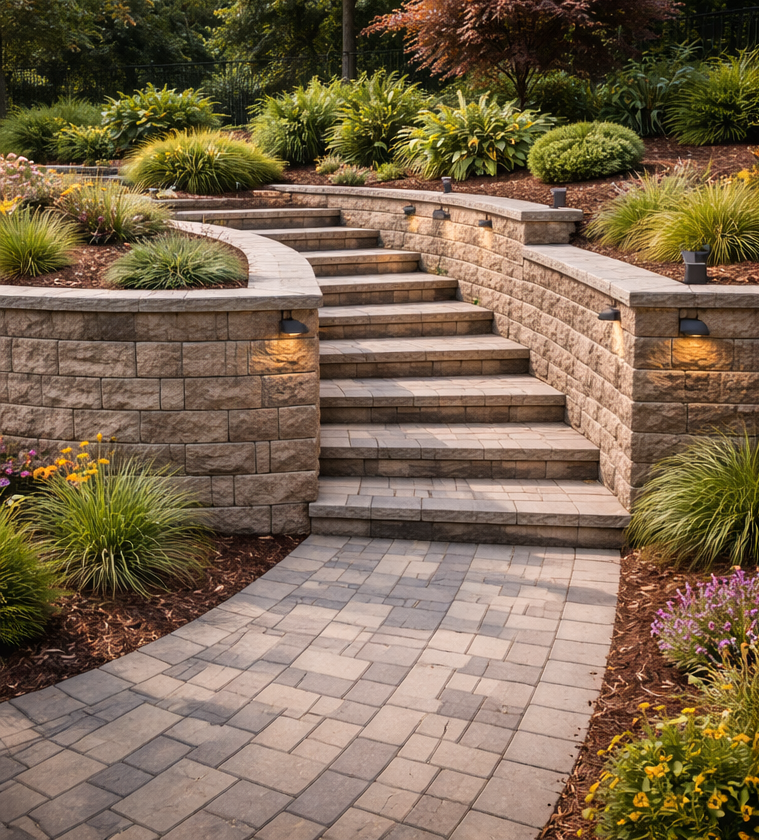
Terraced Stair & Retaining Wall Systems
Stairs integrated with short retaining walls creating planted terraces. Combines vertical access with slope stabilization and planting opportunities.
Best For:
- Steep grades requiring both stairs and retention
- Garden-focused properties wanting planted slopes
- Breaking up long vertical runs visually
- Creating micro-climates at different elevations
System Components:
- Short retaining walls (2-4 feet) between stair flights
- Planted terraces providing rest and visual relief
- Staggered stair sections (not continuous straight runs)
- Varied tread widths at terrace transitions
- Integration of boulders and natural elements
Cantilevered & Floating Tread Designs
Individual treads anchored to central spine or wall, appearing to float. Ultra-modern aesthetic maximizing light and view while providing access.
Best For:
- Contemporary and modern architecture
- Hillside properties with views to preserve
- Minimalist landscape designs
- Showcasing structural engineering as art
Design Features:
- Individual treads extending from central beam
- Steel reinforcement enabling cantilever spans
- Open risers maintaining sight lines
- Minimalist handrail systems (glass, cable, thin metal)
- Lighting integrated underneath treads
- Requires careful engineering for safety codes
Switchback & Multi-Direction Configurations
Stairs changing direction via landings—essential for very steep grades. Creates comfortable climbing experience while reducing linear space requirements.
Best For:
- Properties with 10+ feet of elevation change
- Limited horizontal space for straight runs
- Very steep lots where straight stairs would be uncomfortable
- Creating architectural interest through geometry
Configuration Options:
- 180-degree switchbacks with square landings
- 90-degree turns creating L or U shapes
- Multiple direction changes on complex grades
- Varied flight lengths responding to topography
- Landing sizes accommodating furniture or gathering
Trust the Bay Area Concrete Experts for Your Stair Installation Project
Free site assessment. Clear project pricing. Expert permit processing.
Concrete Stair FAQs
What are San Francisco's code requirements for exterior stairs?
San Francisco Building Code requires 36-inch minimum width, 7¾-inch maximum riser height, 10-inch minimum tread depth (11 inches preferred), and handrails for runs with 4+ risers. Handrails must be 34-38 inches high and graspable. Landings are required at doorways and for stairs exceeding certain heights. We design all stairs to meet or exceed these requirements.
How many steps can I have before needing a landing?
Code typically requires landings after 12 feet of vertical rise. However, shorter runs with landings create more comfortable climbing experiences, especially on steep San Francisco properties. We strategically place landings to break up long climbs and provide rest areas while meeting code requirements.
Can you add stairs to an existing slope?
Yes, adding stairs to slopes is common in San Francisco. We evaluate the grade, determine appropriate stair configuration, design foundations that work with existing conditions, and integrate stairs seamlessly with surrounding hardscape. Sometimes terracing with short stair runs works better than single long staircases.
What's the best finish for outdoor stairs?
Broom finish or exposed aggregate provide optimal traction for outdoor stairs exposed to weather. Avoid smooth-troweled finishes which become slippery when wet. Lightly stamped patterns can work if texture provides adequate grip. Treads need more aggressive slip resistance than risers. We prioritize safety while achieving attractive appearances.
Do stairs need handrails on both sides?
Code requires handrails on at least one side for stairs with 4+ risers. Stairs 44 inches or wider need handrails on both sides. Even when not required, dual handrails improve safety and accessibility. We'll specify handrail requirements based on your stair configuration and recommend optimal placement.
Can stairs be built into retaining walls?
Absolutely. This is a common and practical solution. We can design stairs integrated into retaining wall systems, creating seamless transitions between terraced levels. This approach often proves more economical and aesthetically pleasing than separate stair and wall construction.
How do you prevent water pooling on stair treads?
We slope treads slightly forward (about ¼ inch per foot) to shed water. Nosing design directs runoff over tread edges. Drainage at stair bases prevents water accumulation. Proper drainage is critical in San Francisco's wet season for both safety and preventing concrete damage from freeze-thaw cycles (rare but possible).
What's the difference between residential and commercial stair codes?
Commercial stairs have stricter requirements including specific rise/run ratios, wider dimensions, additional handrail specifications, and uniform tread/riser dimensions throughout runs. Most residential exterior stairs follow residential codes, but commercial standards may apply to multi-family properties or business locations.
Can you match new stairs to my existing concrete patio?
We can approximate existing concrete colors and finishes, though perfect matching is challenging due to aging and weathering. Sometimes creating intentional contrast or complementary designs looks better than attempted exact matching. We'll evaluate your existing work and recommend approaches that create cohesive appearances.